Category Archives: Uncategorized

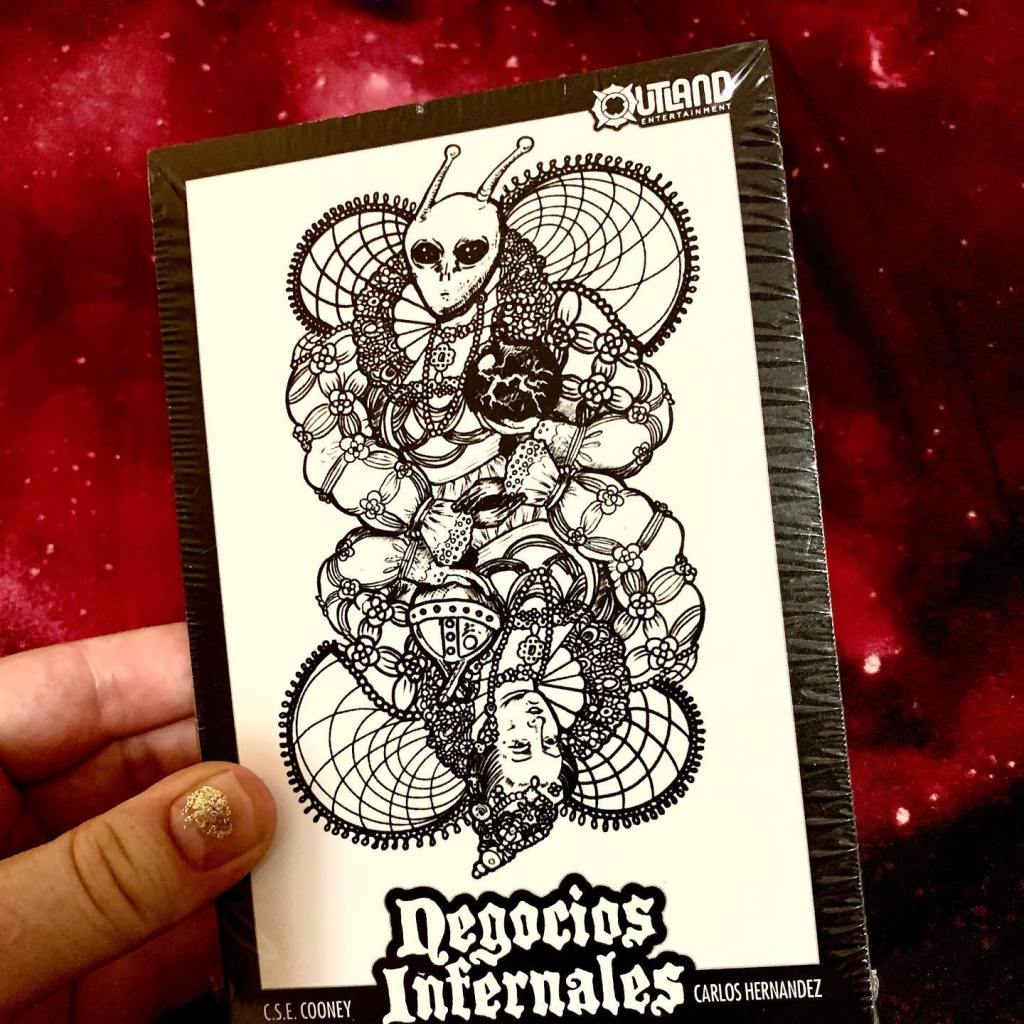
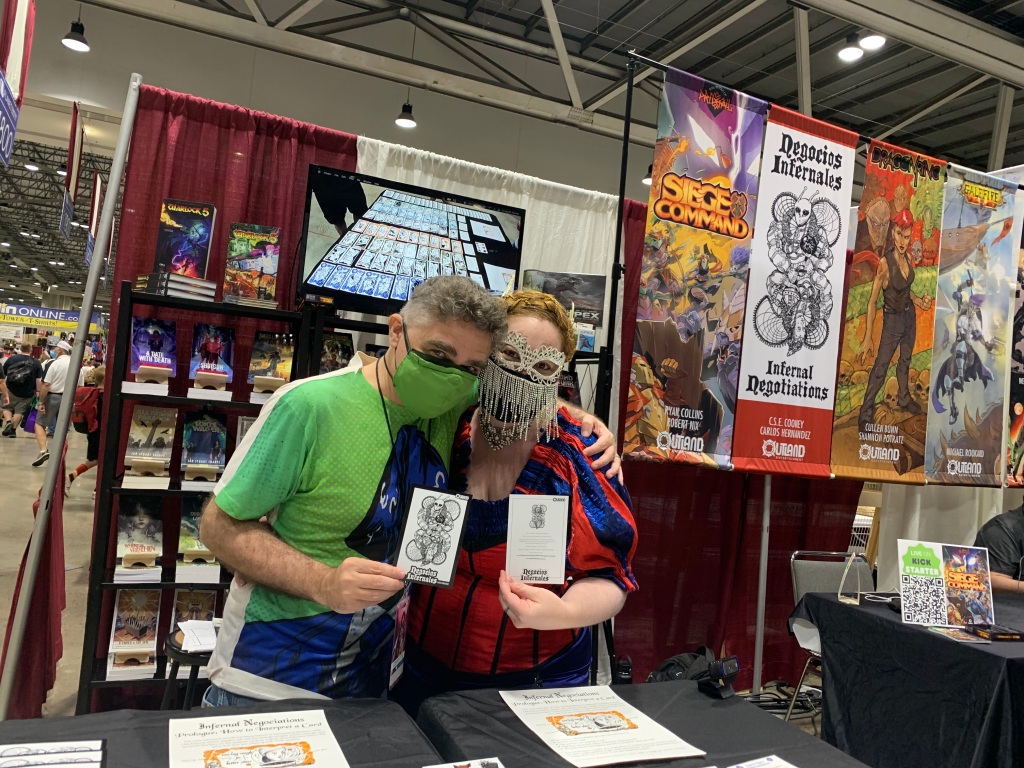
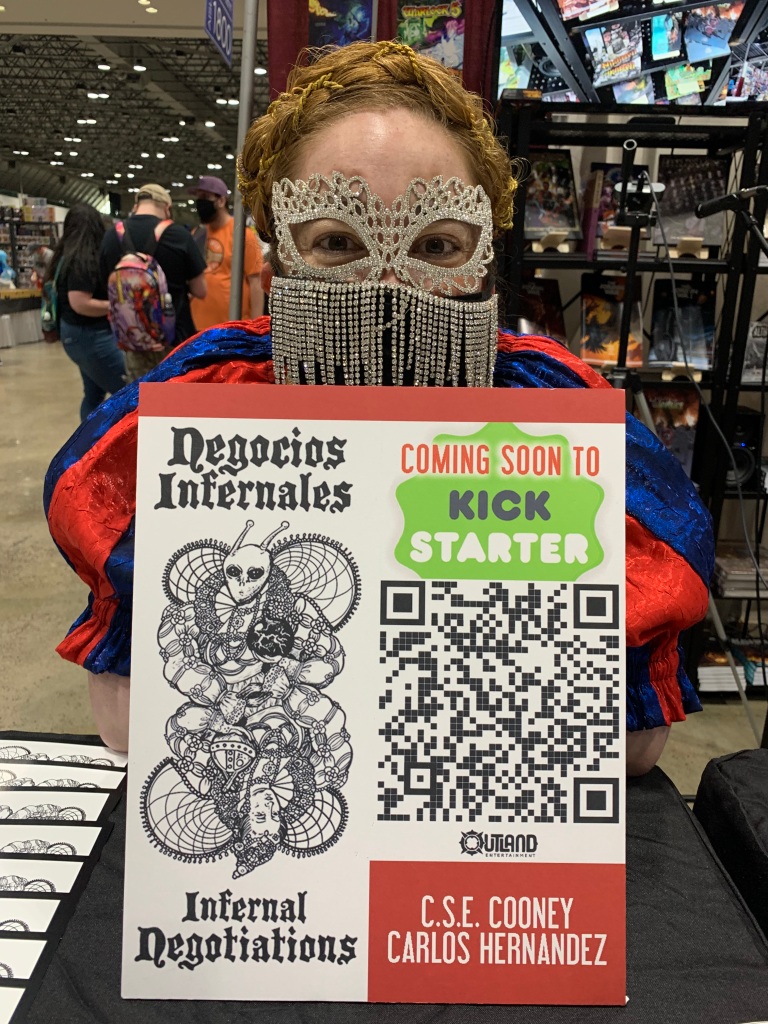
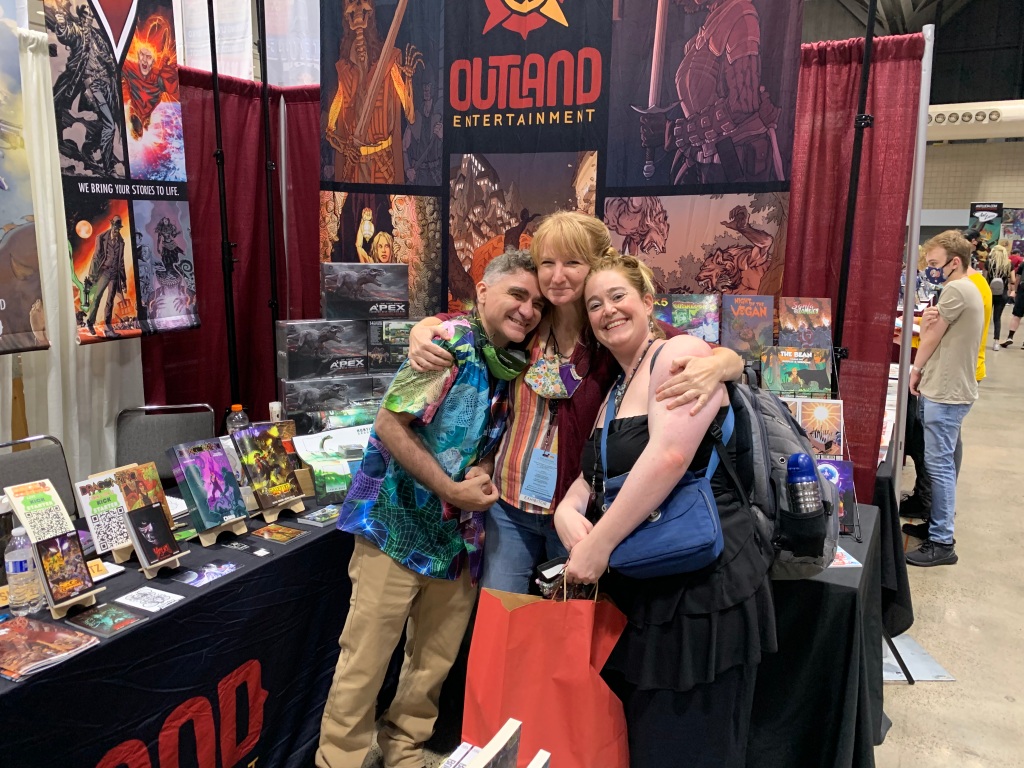
Negocios Infernales is Acquired By Outland!

I cannot wait to share this game with you! And see the Infernal Salons you host with our writing prompts! There are going to be such rich, hilarious, mysterious times ahead for all of us!

csecooney's avatar

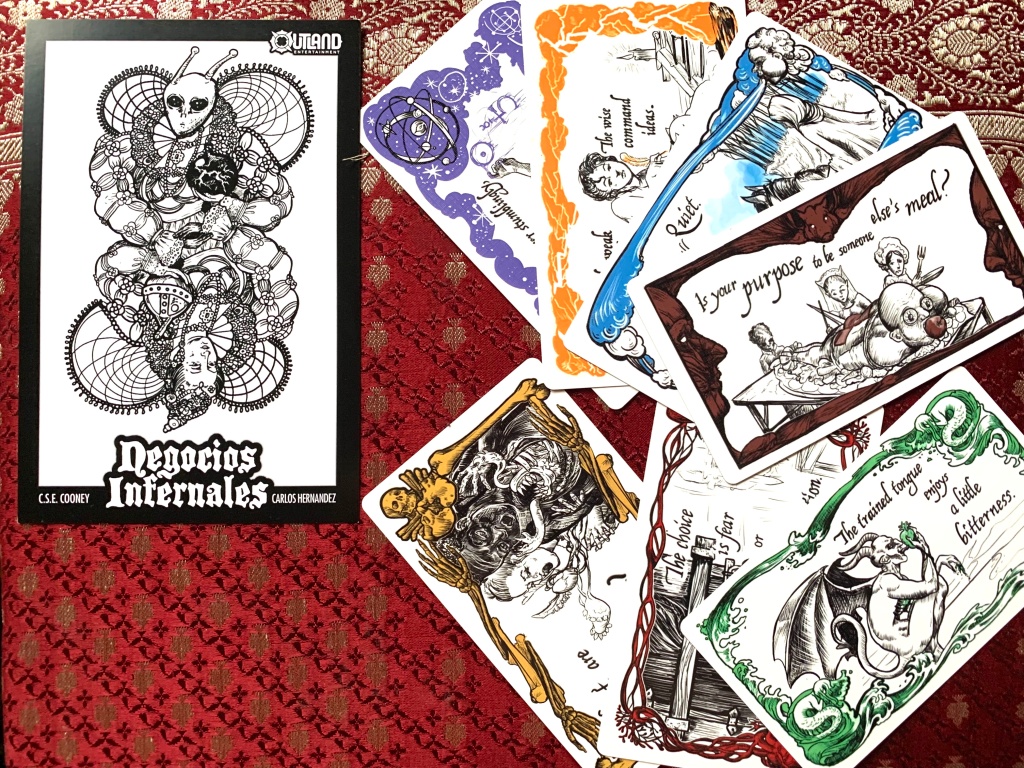
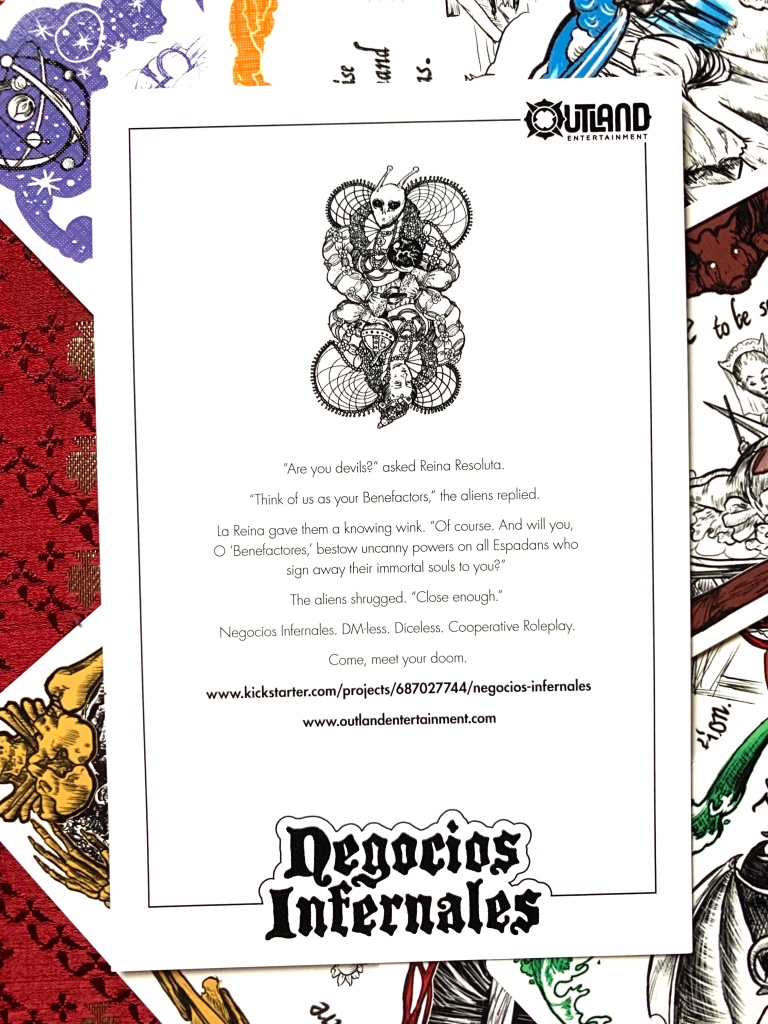
Carlos and I have GREAT NEWS! The fabulous people at Outland Entertainment have acquired our Table Top Role-Playing Game.

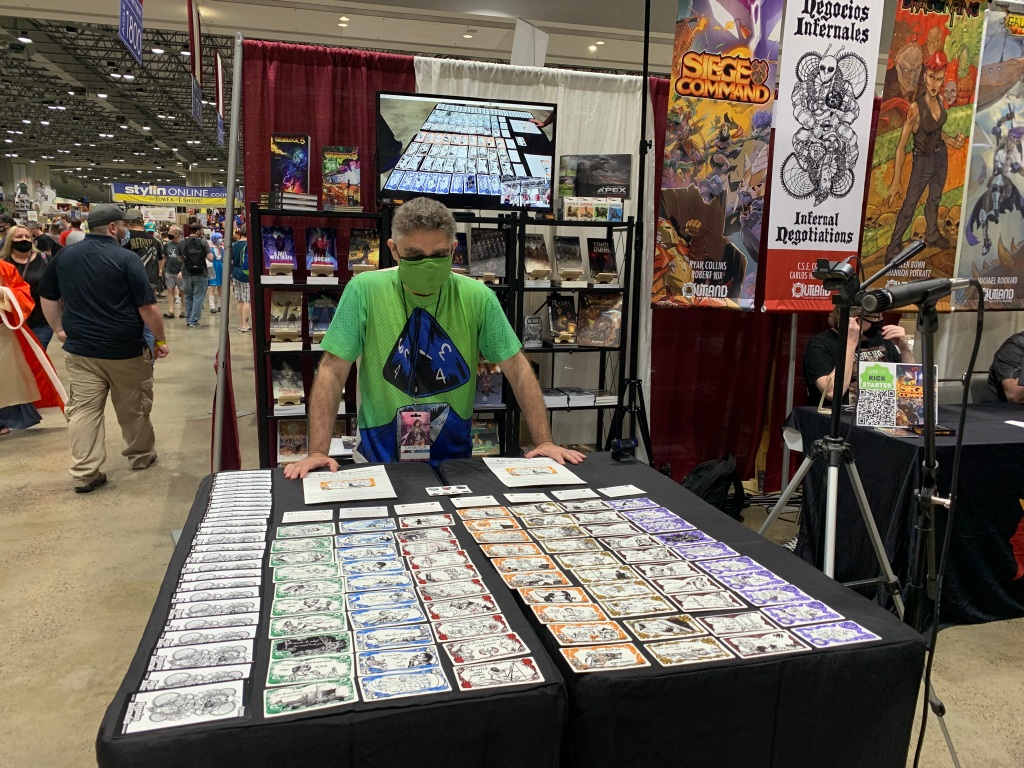
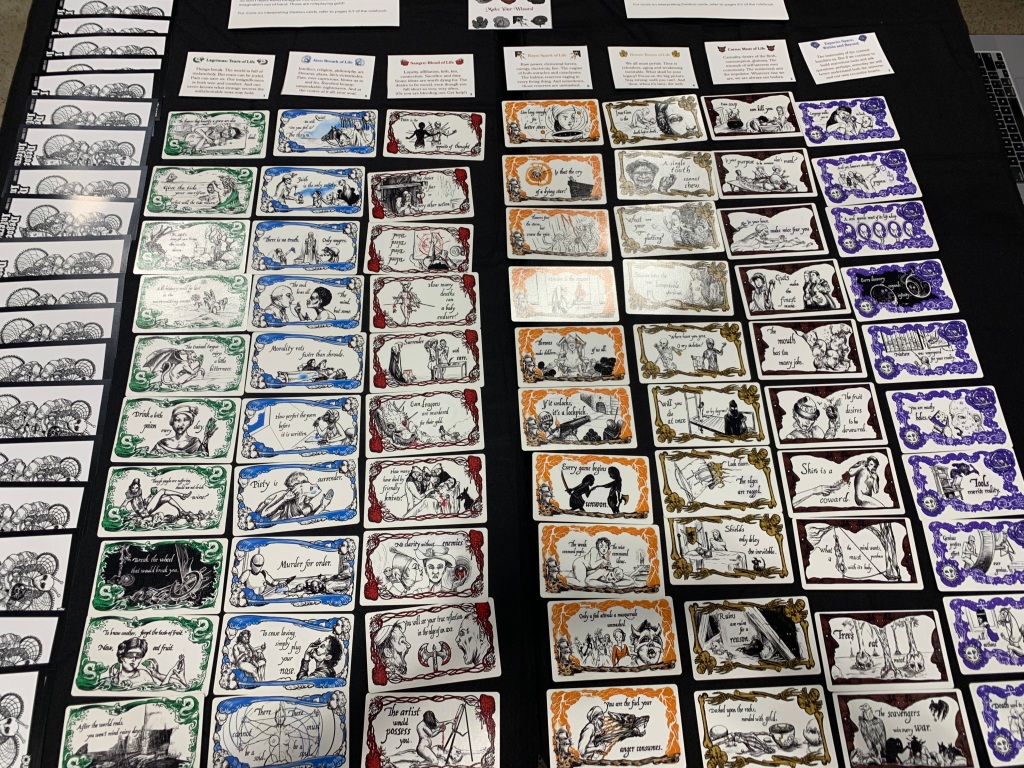
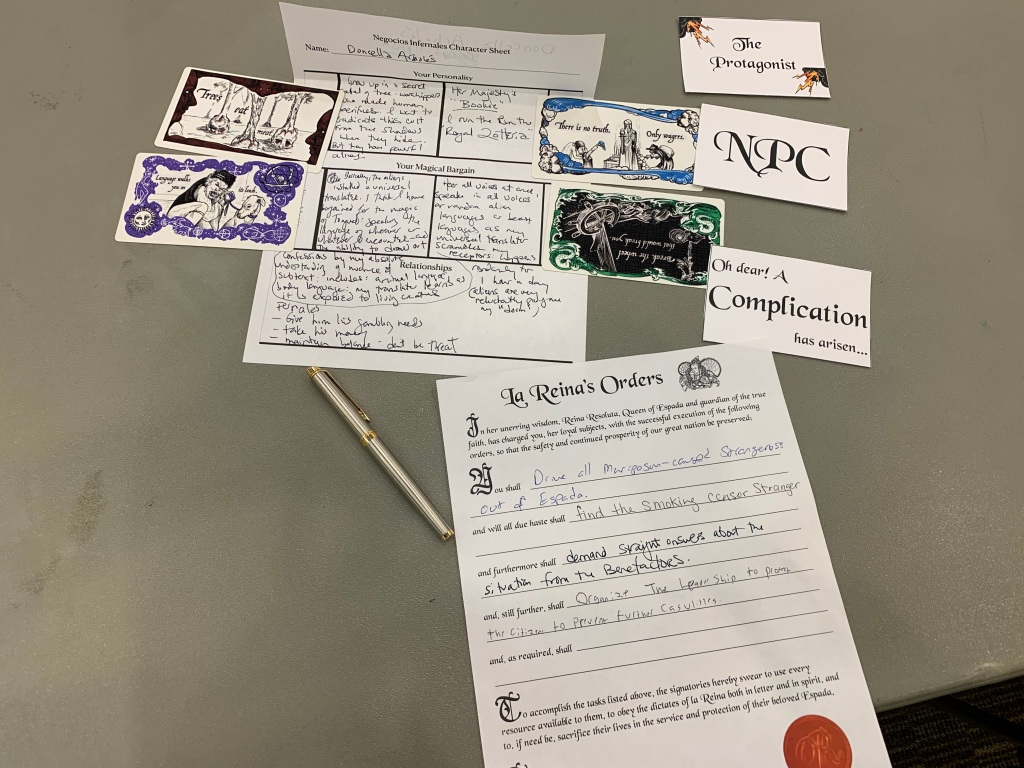
It’s a GM-less, diceless, cooperative storytelling game, set in an alternate world called Gloriana (kind of like Spain in the breath before the Inquisition), and it uses a bespoke deck of 70 cards we created with art by Rebecca Huston!

To receive our Infernal Newsletter, sign up here at Outland’s Negocios Infernales page! To receive notifications about when our Kickstarter is kicking off, follow our Kickstarter pre-page!

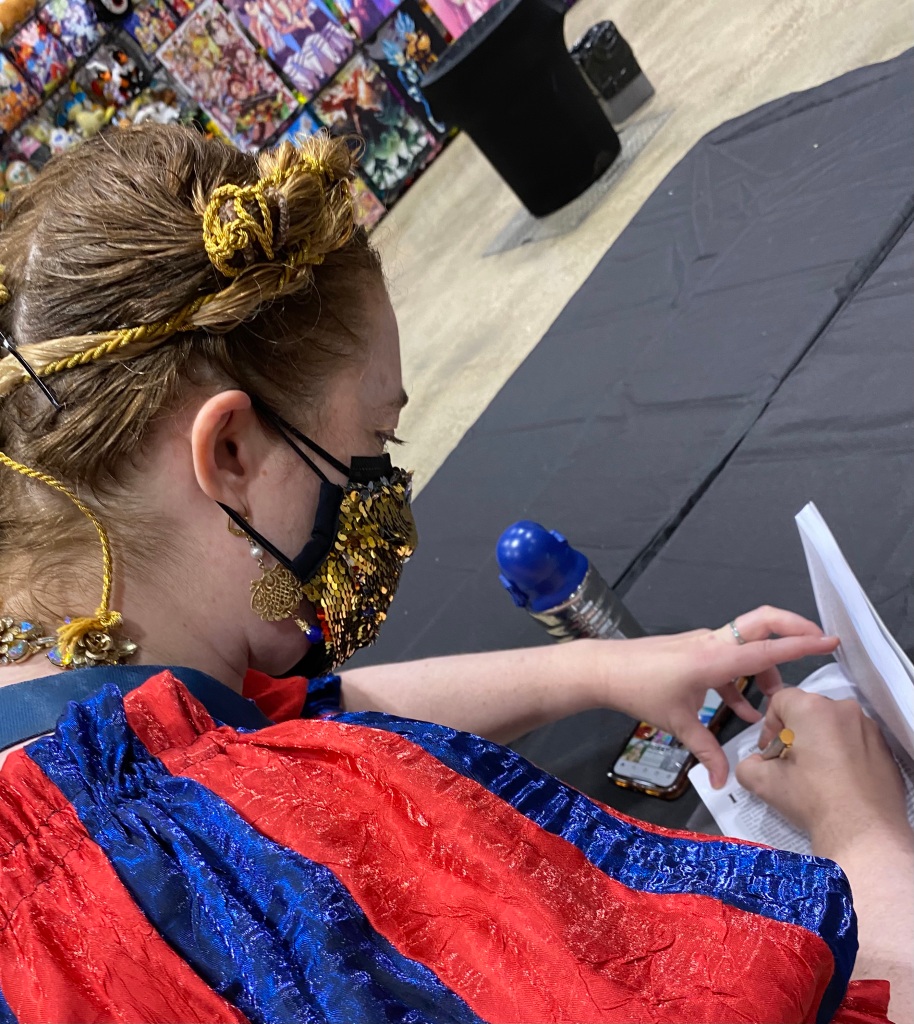
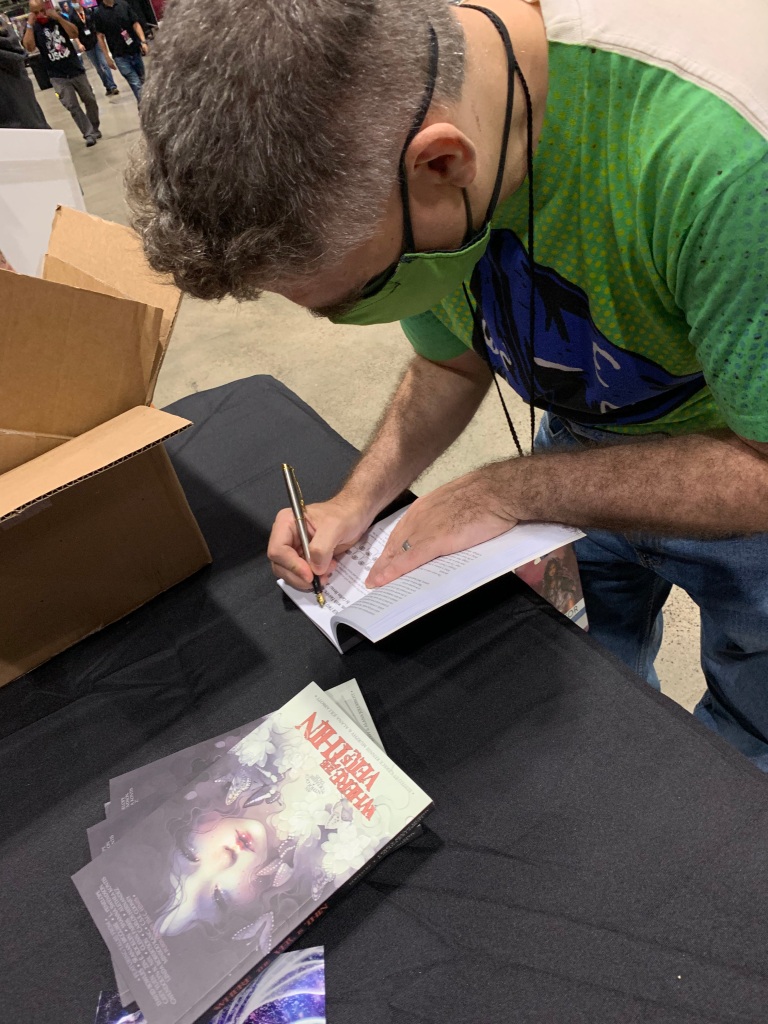
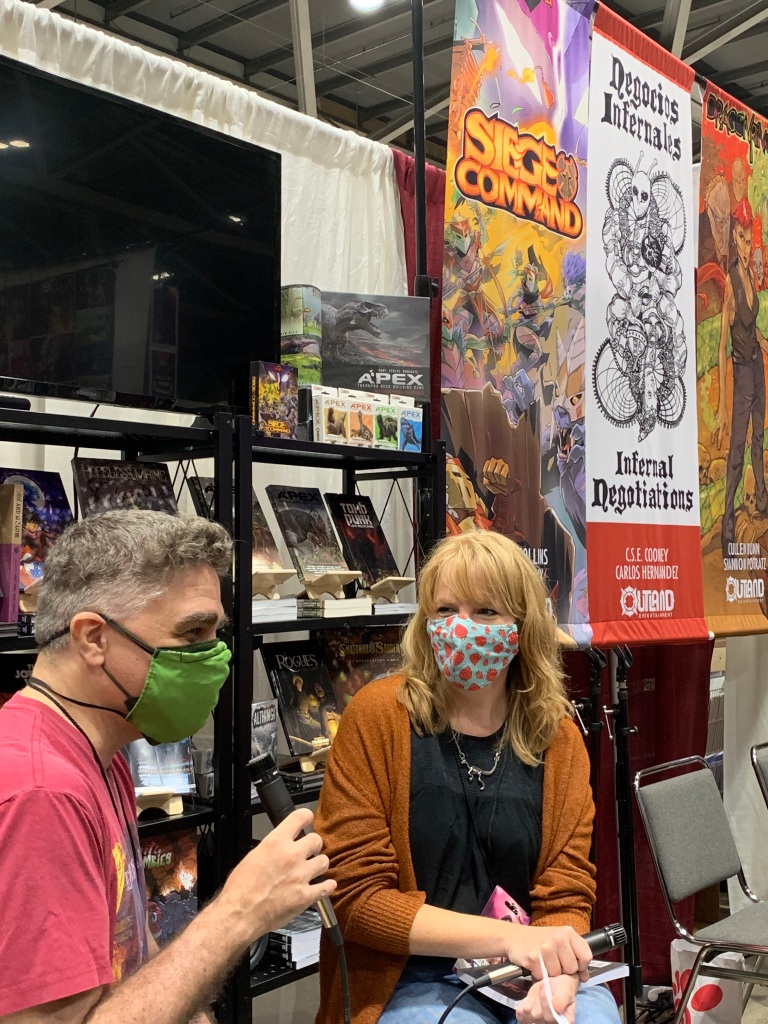
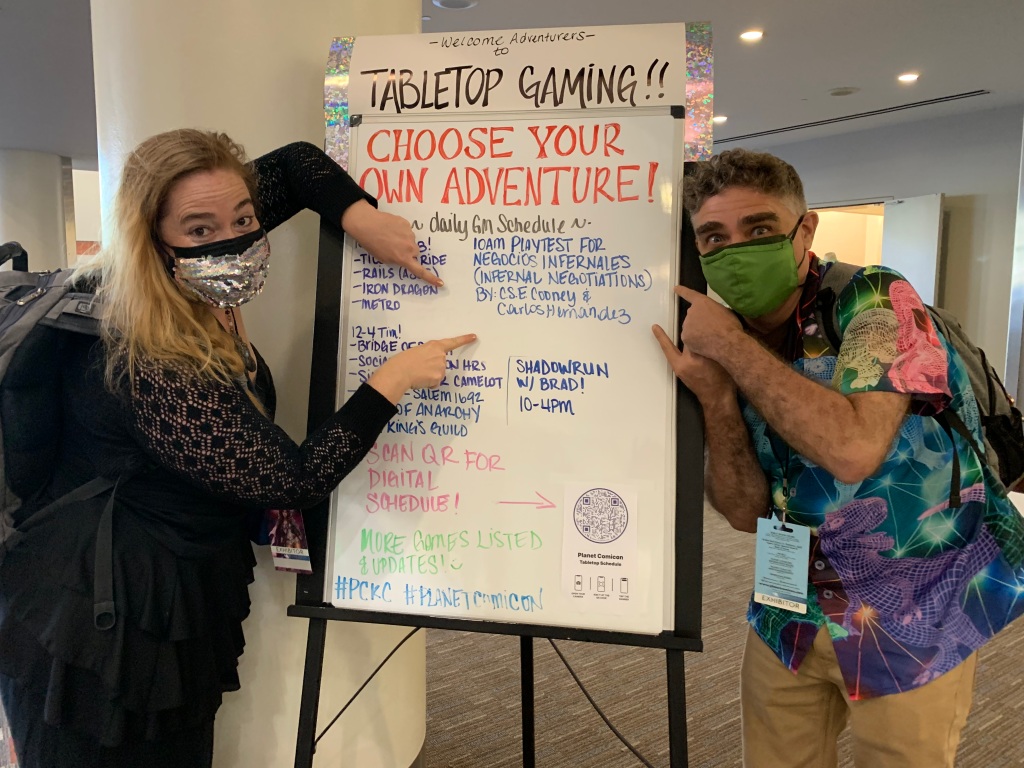
We, meanwhile, had a great time at our first Planet Comicon in Kansas City, Missouri, meeting our publishers, making friends, giving interviews, signing books, and playtesting Negocios Infernales in the Game Room.

We’ll very likely be there again in April 2022, so look for us there!

View original post

Leave a comment

Filed under Uncategorized

The Last Stately House: A Ten-Minute Play

I’ve been reading some of my old ten-minute plays I used to write for 24-Hour New Plays Festivals, for Columbia College Chicago, and then later for the Immediacy Theatre Project. This is one of the latter ones, which means it’s newer, though it’s still not very new.

I remember loving my actors, but feeling ambivalent about my writing at the time. But every time I read it, I still think (as Carlos says) that there’s a “there, there.” That’s one of his favorite phrases. “There’s a there, there.” The phrase reminds me of the word haecceity, which is one of my favorites. It means the “thisness” of a thing.

One of my actors was a beautiful young gay man who had played many a straight lover on stage. He wanted to play a lover who was more like himself. So I wrote him a role that starts melancholy but ends in hope. I don’t remember what inspired me to write the other two roles. I think that maybe one of the actresses was a trained opera singer, so I gave her a snippet of Gluck to sing. If I could guess from the text, I would say that the other actress always wanted to go hang-gliding, or was a trained hang-glider, or maybe just loved flying dreams. But I can’t be sure.

So today, I thought for something different I’d post this thing in its entirety, for your viewing pleasure.

CW for different manners of death discussed; the play takes place in a kind of afterlife, as so much theatre does.

I didn’t get to see it performed; I wrote it for the actors of the Saint Louis Immediacy Theatre Project when I was in Rhode Island, I think. This one, and one other called “Raven, Tiger, Woman, Tree” that maybe I’ll share with you another time.


IN THE GARDEN AT THE BOTTOM OF THE LAST STATELY HOUSE

by 

C. S. E. Cooney

CHARACTERS

THE THREE DREAMERS

Plague: a young man who watched his mother fall from the plague (ragged urban clothes)

Garden: an older woman who wanted a garden outside the city, mother of Plague’s lover (a crown of torn green leaves)

Cliff: a person who was hounded off the cliff by city people, broken and only half-mended (tattered wings)

The Three Dreamers are in a walled-in garden. Above them is the city, “The Big Smoke.” At the other side of the garden wall looms the Last Stately House. The windows are lit. Sometimes there is a flicker of movement behind them. The dreamers recite the invocation, perhaps with a drum, sung or chanted, in round or in harmony, repeat as needed.

CLIFF, GARDEN, PLAGUE (together)
Juntos romperemos todos los límites
Juntos juntamos las cosas disímiles
Juntos cruzaremos la ultima frontera
Juntos saltaremos al dentro la caldera

CLIFF
Now that that’s over with—

GARDEN
It’s a sacred ritual. No need to dismiss it so lightly. 

CLIFF
My bones are smashed and my wings are broken. I have to do something lightly. So, we all know where I came from. 

She points up, dives her finger down with a whistle and KER-PLOWy sort of sound, says to Garden:

But you, what, did you grow here or something? 

GARDEN
Oh, no. I’ve traveled some. Toured this city and that. 
Ended up here to tend a few things. The garden was only one of them.

PLAGUE
I’m from the city. 

CLIFF
The city, city? The one on the cliff? 

She points up again.

PLAGUE
 The Big Smoke, we call it. 
Dirt and bodies. Flies. One big sickness.
Nothing grows there, only dies.

GARDEN
Were you born there? 

PLAGUE
I don’t remember. My mother said so, anyway.

GARDEN
I was born in an opera house, beneath the naked thighs of a gilded caryatid. 
My mother was a chorus girl, my daddy was a phantom in the sub-basement. 
I grew up in greasepaint, but I always wanted a garden. And now I’ve got one. 

CLIFF
That must be very satisfying for you. 

GARDEN
And yet, I remain unmoved by your sarcasm.
 Look around you. The mossery underfoot, the ivy on the walls. 
No door, hidden or otherwise. 
Roses. Red, where the nightingale pierced her heart on the thorns.
All these statues.

PLAGUE
I’ve lived in the city so long.
I have longed for this quiet. To be a statue, like the statues here—

GARDEN
You know what I think? I think they’re watching me. 
Like those portraits of famous people? Celebrities and deities, that sort of thing? They sort of follow you around with their eyes?
Only with statues, it’s far more personal. It’s not just their eyes that move.
Their whole bodies reach out when I’m not looking.

CLIFF
That’s why I ran. There were people—horrible people—chasing me. 
Not statues, more like animals, baying at my heels. 
I wish I’d had a shock stick. I wish I’d turned around and smashed their skulls in.

GARDEN 
That’s what happens when you turn people into animals—you want to hurt them. I read a study about it once. Call someone a cockroach and you’re more likely to kick them.

CLIFF
I’d never hurt a real animal. I don’t even wear fur.
But human animals—when they hunt you, it’s either fight them or run.
And you saw what happened. I ran.

PLAGUE
We all run. 

GARDEN 
Not all of us. 

CLIFF
There was a cliff ahead. I knew it was coming, but I couldn’t stop in time. 
No. I didn’t stop in time. On purpose.
They were right behind me. They wanted to tear me, tear me, so I—

She can’t continue. A pause.

PLAGUE
I was with my mother, in the city. 
She wanted, I don’t know, the anonymity of the urban vastitudes.
But I could feel the city shrinking me. Every day I got smaller.
 Even my mother forgot, after a while, that I was there.
One day we went walking—even though it was dangerous—even though they warned us about the sickness. 
But she wanted to go out, and I wanted to protect her, so I followed. 
She never noticed. She walked ahead of me. Facing away.
All I could see was her back.
I called to her—Mother!—but—

CLIFF
I jumped. Before they could push me.

GARDEN
Yes. 

PLAGUE
She fell. Right in front of me.

GARDEN
Yes.

CLIFF
And then—flight.

GARDEN
Now, that’s something, isn’t it? Sometimes I fly, too. I never know why I do, I just do. I go to bed every night hoping I’ll fly again. It’s always such a treat.

CLIFF
It wasn’t like that for me. It’s just, when I jumped, I never hit bottom. 
Instead, my spine shattered into all these brave new bones—hang-glider-wide. 
My skin stretched to fill their new frame.
Such a delicate membrane: so thin, the moonlight might puncture it.

GARDEN
How long did you stay aloft? Sometimes I can fly all night. 

CLIFF
I flew—I don’t know how long I flew. But it wasn’t like that, it was—

GARDEN
It’s wonderful, isn’t it, flying? Just wonderful! 
One time, I flew from one end of the city to the next. 
High above the smoke. The lights.
I never plan my route.
There are no maps up there, only landmarks.

CLIFF
 It was, yes, wonderful—except, somehow, I knew it was for the last time. 
After that first flight, I knew, I’ll never fly again.

GARDEN
Well, that’s not very optimistic, is it?

PLAGUE
Look at her wings. Pulp and ribbons. She’ll never fly again. 

CLIFF
I know, because after that first flight, I went back to the city. Started over. I thought everything would be normal again. That I could just live, and be ignored. 
But they found me. They came howling to my door. 
And they hounded me right to the edge of the cliff. 
I jumped again—of course I did—but that time, my wings didn’t work. And so . . .

She makes the whistledown KERPLOW-y noise again.

Here we all are.
I always end up in this garden.

PLAGUE
Say what you will about it, at least it’s not the city. 

CLIFF
I’ll drink to that.

PLAGUE
I’ll never go back to that place. The cliff, and then the buildings like cliffs piled on top of that.

GARDEN
The only building around here is that house across the wall. What did we decide to call it again?

CLIFF, GARDEN, PLAGUE (together)
The Last Stately House. 

GARDEN
Ah, yes. 
I don’t think it’s at all bad—it’s not the City Opera House, but then, what is?—but those windows!
Eight black windows like spider eyes is hardly a cozy aesthetic.  
Why, I do believe that house is watching me.
But I really don’t think it means me any harm.

CLIFF
Wait till somebody chases you off a cliff. After that, nothing is harmless.

PLAGUE
I’m harmless. 

CLIFF 
Hardly. 

PLAGUE
I’m practically invisible. My skin is cold Lucite. Light passes through me.
When the city ate my mother, bones-first, when her skin sagged to the sidewalk like a bottomed-out paper sack, all I could do was stand by and watch.
She never saw me. She didn’t even know me when she died.
Sometimes I think my own lover would no longer know me.
He might mistake me for a waterfall, a glass coffin, the blur of his tears.

GARDEN
He might surprise you. 

CLIFF
I hate surprises. They’re like elevators cut loose from their cables. 

GARDEN
Where’s your sense of adventure? 

CLIFF
It fell off a cliff.

GARDEN
You know, speaking of heights . . . 
 I’ve been wanting to climb the the wall and sneak into that house over yonder.
I sometimes catch glimpses of a life behind the windows. 
Someone preparing a feast. 
A fine gentleman, decanting French wine, singing Italian love songs.
Gluck’s opera, do you know it?  Paris wooing Helen of Troy? 


O del mio dolce ardor
Bramato oggetto,
L’aura che tu respiri,
Alfin respiro.
Ovunque il guardo io giro,
Le tue vaghe sembianze
Amore in me dipinge:Il mio pensier si finge
Le più liete speranze;
E nel desio che così
M’empie il petto
Cerco te, chiamo te,
spero e sospiro.

PLAGUE
We all know how that story ended.
Doomed Paris. Doomed Helen.
Doomed Troy, and all the toy soldiers of that war.
Perhaps it’s the same for the man in the house. 
And for his lover, who hears his singing.

GARDEN
But that song! That longing. “Thee I call! Thee I seek!” It moves me.
Like the house itself is sighing for a gentler time.
Like a warm lilac breeze in the dark of November.

PLAGUE
There was no gentler time. The singer knows that. But he likes to pretend.

GARDEN
He has the soul of an artist. Like his mother. 

CLIFF
I don’t think you should go to that house. 
The man in there—what if he’s one of the ones who drove me off the cliff? 
What if he carries that sickness that eats you from the bones out? 
No, the house is too dangerous. The garden will protect you. Us.

PLAGUE
Don’t you understand? 
The garden is part of the house. 
The house is part of the city. 
The city was built out of the cliff that killed you.
Nothing can protect her. Or him. Or any of us.
And it’s too late for me anyway. I’m hardly here at all. 

GARDEN
I’m looking right at you. 

PLAGUE
You’re looking right through me. It’s not the same thing. 

GARDEN 
That’s right. I’m seeing right through you. 
Right to your bones. You are still here. We all are. 

PLAGUE
Whoever we are. 

CLIFF
I am poor smashed Icarus in the garden of the damned!

PLAGUE
I am Pestilence in barbarous attire.

GARDEN
I am the heir of the Last Stately House, and my son is waiting there. 

PLAGUE
Your son? 

GARDEN
Your lover. He is waiting there for you. 
He is filling your wine cup. 
He is singing for you.

PLAGUE
For me? 

GARDEN
He’s a tenor. Like his father.

PLAGUE
Yes. I know. 
He was born between the matinee and the evening performance, he told me. 

GARDEN
What else did he tell you? 

PLAGUE
That when I come to him at last, he will press his lips to my glass lips, and fill me with his wine.

GARDEN
He always was a poet.

CLIFF
What are you waiting for? Why don’t you run to him?

PLAGUE
I am afraid he will not see me. That his song will echo through my hollowness.
That he will turn his back on me, and walk away into the city, where I cannot follow.

CLIFF
If he does, you must not chase him.

GARDEN
If he does, you must stand very still and sing him back.

CLIFF
There are ways over the city. Ways above it.

GARDEN
Once you get the knack of flight, you’ll never walk anywhere again.

CLIFF
Even I had wings once. Maybe I’d still have them if I’d gone forward, not back.

PLAGUE
I never had any wings.

GARDEN
Well, none of us need wings to get over that wall. It’s not a very tall wall, after all. 
Stand on my shoulders.
I have a gardener’s shoulders, scarred and smelling of roses.

CLIFF
When you get there, will you tell us what you see?

PLAGUE
Listen.
When I get there, I’ll haul you up, too.

CLIFF
Me? 

PLAGUE
Do you think I’d leave you behind? 

CLIFF
But I’m . . . broken. 

GARDEN
We won’t forget you. 

PLAGUE
I’m bringing you with me, so you can see for yourself.

They climb the wall.

Leave a comment

Filed under Uncategorized

Regarding “Spotlight”

After reading my first draft of “Salissay’s Laundries,” Mike Allen, who is also a journalist as well as an awesome writer and poet and editor, told me I should watch the film Spotlight (a little bit of homework, a little bit of pleasure), and I got nervous, because I get nervous of watching Serious Movies, so I talked Hernandez into watching it with me.

He was game, so after his Streetfighter Tournament ended, we ate cake and watched it.

Sheesh.

I mean, SHEESH doesn’t even. I don’t even have the expletives.

Look, I’m so behind on movies, and I always will be, and I knew nothing about Spotlight except that it was about journalism. I looked it up on Wikipedia after the movie was over, and saw that (of course) it won two Academy Awards for Best Picture and Best Original Screenplay, as well as the Screen Actors Guild Award for Best Ensemble Cast.

Never heard of it. Because, me and movies.

WHAT ELSE AM I MISSING, PEOPLE?

I know, I know. Everything.

I have to say, Spotlight deserved EVERY DAMNED ONE OF THOSE AWARDS. Like a Chabon novel, all that heavy material was made electric and vivid by the energy of the characters, their relationship to each other, their stake in the stories, their bulldoggedness. I was thrilled the whole way through; I was even CHEERFUL. Until I wasn’t.

And then, afterwards, I was SO FURIOUS, and I cried all the tears of fury and envy and ART.

(I’m often pissed off after good art, even if it’s a bright end, even if there’s catharsis. My catharsis comes out as BLAZING ANGER. At nothing and everything. Like after that frikkin PS 1 “Structures for Life” exhibit on Niki de Saint Phalle last week? WAH! I mean, it was SO JOYOUS, and then it became deadly serious, and then I cried, and now I’m INFECTED; I’m stained, a bright scar.)

When the movie was over, I spent twenty angry minutes RAILING AT THE CEILING (and poor Hernandez), leaking and flailing, and deciding once more that I’ll never be a writer, never, and now I want to re-watch Good Night and Good Luck again, and also I want to watch The Cradle Will Rock, and also I want to kick things.

So that was a great night. Back to work tomorrow. Another day, another draft. amirite?

***

How our brains work:

To lighten the mood after my tantrum, we started discussing Liev Schreiber’s character.

I mean. Carlos and I went OFF on his performance. First of all, I frikkin LOVE LIEV FRIKKIN SCHREIBER. Ever since that weird rom com with the elevators, and time travel and Meg Ryan and Hugh Jackman, and he’s the inventor? Anyway, and then Everything is Illuminated happened, and I just love him.

But that CHARACTER! Marty Baron, executive editor at the Boston Globe.

“Another adjective,” he says, deadpan, removing it from the article, in the one scene/line of the movie where he’s actually comfortable in his own skin.

(CRIMINY I LOVED EVERY NON-TWITCH OF SCHREIBER’S CAREFULLY NEUTRAL FACE!!!)

We were lying there, trying to imagine Henry V giving his St. Crispin’s Day speech in the style of Marty Baron telling his reporters that they can take a moment, but they have to be back to work on Monday. Or William Wallace in a business suit, telling another bunch of strung out, nervous reporters, very uncomfortably, “So. I just got a phone call from Longshanks. Says he’s going to slaughter us on Monday morning. So. Everyone get some rest this weekend. They can take our lives, but they can never take our freedom.”

1 Comment

Filed under Uncategorized

Factory Girls’ Rhyme: Fanlore of Desdemona and the Deep by Caitlyn Paxson

Today, on the two year anniversary of the book launch of Desdemona and the Deep, I want to share with you this fanlore “Factory Girls Rhyme” by Caitlyn Paxson. I love her. I love her.

Desdemona Tattercoats
One part goblin, one part goat
One part swan and one part stoat
If you’re down to your last oat
She’ll fill your boots with golden notes

Desdemona Tattercoats
One part woman, one part goat
One part wolf and one part stoat
If the boss man starts to gloat
She’ll creep in and squeeze his throat

Desdemona Tattercoats
One part ghost and one part goat
One part fox and one part stoat
If you’re used up, dying, broke\
Just call her name into the smoke
Desdemona Tattercoats 

Here is Caitlyn Paxson reciting her text by candlelight…

And here is some of Caitlyn Paxson’s Desdemona fan art at the bottom. Her gifts are bountiful: one of my dearest friends and favorite collaborators. I CANNOT WAIT to share her novels with you! Her talents are pretty much infinite!

Desdemona
Chaz

Leave a comment

Filed under Uncategorized

Observation Journal — story patterns

Kathleen Jennings has the MOST extraordinary mind! I love her observation posts about story structure. I mean, I love everything about her, really. Read her books. Buy her art. But also, THIS POST!

tanaudel's avatarKathleen Jennings

This observation journal page continues a previous activity, playing with story structures.

I read through a few more short stories and made notes of the big segment-moods through which the stories moved. I was trying to think of these shapes separate from those stories, but I do wish I’d made a note of what stories they were! One of them was an M.R. James.

Double handwritten page of observation journal. On left page, 5 things seen, heard, and done, and a picture of a toy rabbit. On the right, notes on story structures.
Rosettes of lichen, ants in an apple.
(The page number at the top right should refer to p115 instead of 111 — this system is useful but not infallible).

If this approach to thinking about stories (written or drawn!) resonates with you, I encourage you to make your own list based on short stories you like. But for completeness, here are all the short story shapes from this page and the previous one:

  • Ordinary — inkling — confirmation
  • Reluctance — engagement — deepening
  • Humorous sketch…

View original post 286 more words

Leave a comment

Filed under Uncategorized

Mellification! IT EXISTS!

I just wanted to say that today, while writing, I REALLY wanted the word “Mellification” to exist, but I didn’t know that it did, so I went on a deep-dive etymological search!

I started with “mel,” which I knew meant honey (because of the French “miel” and also because of “mellifluous”) and trying to find the roots of “saponify,” which means to turn something into soap (it turns out I didn’t need the “sapon”/soap part, just the “ify” part, which comes from the Latin facere, “to make.”)

AND ALL OF THAT SCURRYING THROUGH ARTICLES ABOUT HONEY-MAKING FINALLY LED ME HERE…

TO THE MELLIFIED MAN!”

Well, and also to this gem, within said article:

“Mellification is a mostly obsolete term for the production of honey, or the process of honeying something, from the Latin mellificāre (“to make honey”), or mel (“honey”). The Ancient Greek word mélissa (μέλισσα) means “bee; honeybee; (poetic) honey”.

I needed this word for SALISSAY’S LAUNDRIES, because of what happens to human blood when it is afflicted with gentry enchantment. It turns to honey, you see. Or at least grows sweeter, and sometimes sparkles in the dark, and, well, does other strange things when, for example, injected into mice. BUT YOU’LL SEE!

Leave a comment

Filed under Uncategorized

Salissay’s Laundries: Research Tabs (and Teasers)

I’m having so much fun writing Salissay’s Laundries–or maybe, I should say, researching it–that I must simply share all my currently opened tabs on the subject. FOR POSTERITY.

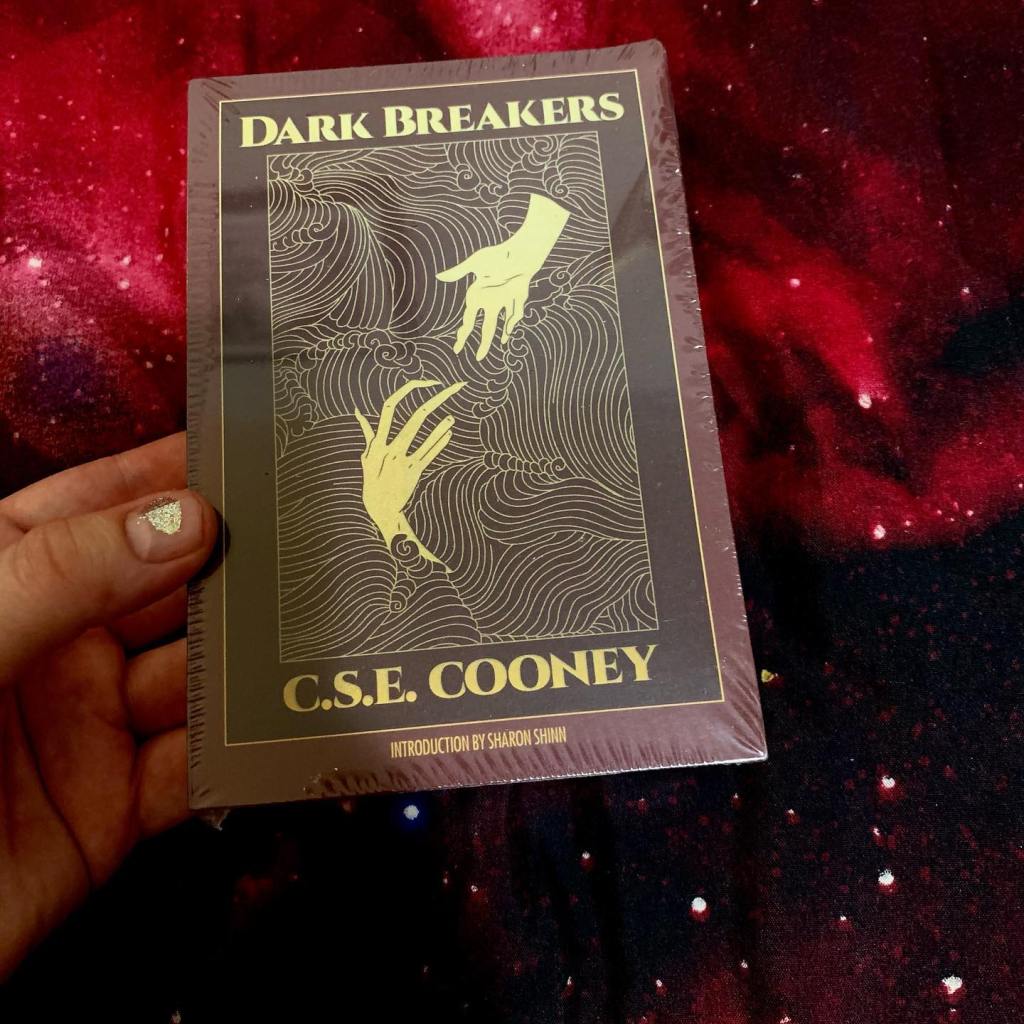
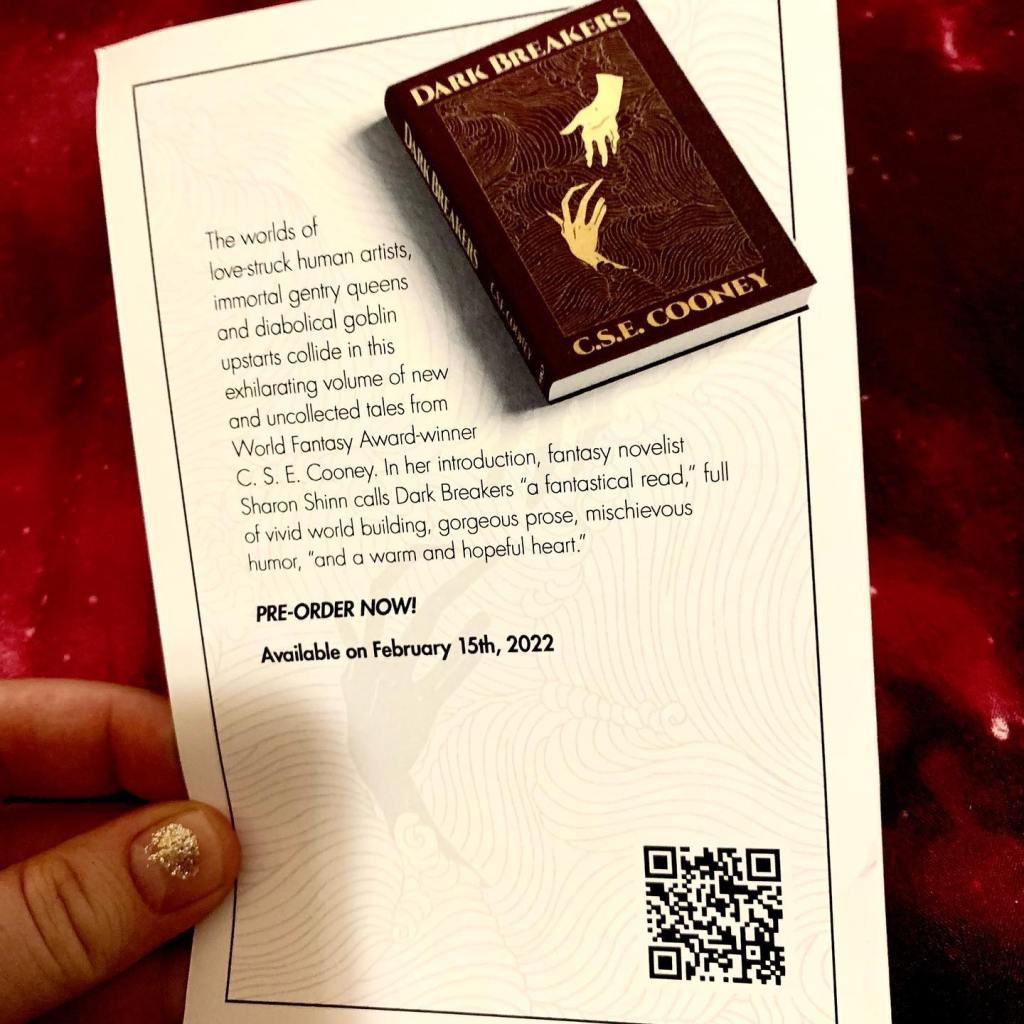
I’m currently almost 5000 words in, and probably just about halfway done. It will be one of the three new stories in my Dark Breakers collection, along with “Longergreen” and “Susurra to the Moon,” as well as the revisions and expansions of “The Breaker Queen” and “The Two Paupers.”

I haven’t done any huge, specific announcements about Dark Breakers yet, or a cover reveal, but that should be coming soon.

But while I’m here, DO let me share! This isn’t the extent of it by ANY MEANS, since I also close tabs when I’m done with them, but here’s today’s sampling:

ON WORKHOUSES

London Lives 1690-1800: Crime, Poverty, and Social Policy in the Metropolis: Workhouses Article

Workhouses of the Georgian era (Wikipedia)

The Representation of the Workhouse in 19th Century Culture (PDF)

Seventy-Four Years in the Workhouse

The Workhouse: Story of an Institution (A Tour)

The Workhouse: Story of an Institution (St. Pancras)

Ten Facts About Irish Workhouses

ON THE MAGDALENE LAUNDRIES

(I have done a lot of reading about these over the last few years, so these next few are really just a sampling.)

Magdalene Laundries in Ireland (Wikipedia)

Atlas of Lost Rooms: ‘Asylum’ on the site of the Sean MacDermott St Laundry since 1822. 

History Collection: These Religious Prisons Turned Orphans, Young Girls, and Pregnant Women into Slaves Inside Convent Walls (This was AMAZING and has a whole link tree to further reading that I found FASCINATING!)

Inwood’s Old Magdalene Asylum

New York Times’s “A Blot on Ireland’s Past, Facing Demolition”

The Last Days of a Laundry

Abbotsford Convent: Magdalen Laundry

Mother and Baby Homes Commission of Investigation (Wikipedia)

ON WASHING MACHINES

I LOVE THIS! I JUST… I LOVE IT!

ON SEARCHING FOR METAPHORS AND A LITTLE GOSH-DARNED VERISIMILITUDE!

Bad Money: Ancient Counterfeiters and Their Fake Coins (ALL THIS RESEARCH BUT I HAD TO CUT THE METAPHOR! Ah, well. Maybe I can recycle it some day!)
Here’s from my cut file:

After a lifelong career as an investigative journalist, I am—if you will excuse the seeming boast—a woman considered above reproach, ruthless in the pursuit of Truth, firmly on the side of the People. But I do not believe that there is such a thing as “above reproach,” the other side of that old, tarnished “fallen women” coin. Beware this stuffed coin! It is a counterfeit! A fake! False scrip! I, like you, dear reader, am human. Ignorance and imperfection are part of this mortal coil. When I make a mistake in my reporting, I print a correction. Sometimes it is not enough. Sometimes the damage is already done. When I harm someone, I apologize and try to make amends. This does not mean my apology will be accepted, or that the amends will, in fact, compensate for the hurt I caused.

Scientific American: Of Lice and Men: An Itchy History

Nature.com’s “Lousy Heirlooms”

Finally, I will leave you with a snippet from today’s draft. Now, don’t get too excited or critical. It’s a first draft. Things change. Like my false money metaphor that I loved and lost. (See above.)

Yet there was a rhythm in that washing room, a song within that thunderous noise. It was a song of celebration, a proud song; it lauded human invention and human industry. I found it overwhelming and also beautiful. If I did believe in the gentry, I could also believe that this song could cure whatever spell they set upon me. It took over me bodily, worked me harder than I was perhaps willing to work, and left me, by my luncheon, wrung-out and elated.

But I did not mean to waste the rest of my afternoon breathing steam and elbow-deep in suds. I meant to go exploring. And so, on an exploratory journey to the toilets, I found my way into the Infirmary, the Kitchen, and lastly, to the Confinement Room, where a pregnant young woman was bound to the iron rails of her bed by manacles of iron.

She looked at me, and I thought for a moment I could see her eyes glow green in the dark, like a wolf’s, before she turned her face away. But I approached  her nevertheless.

“Can I help you?” I asked softly. The closer I came to her, the less I smelled the overpowering odor of the room—old blood and sour milk and the fug that settles in an inner chamber with no windows or ducts to conduct air into or through it—and the more I smelled a scent like cream and violets, like lavender and wine, like antique silk and new-cut grass and heavy velvet and crushed autumn leaves.

“You?” she asked, turning once again those strange (sea-glass) eyes upon me. “What can you do, mortal?”

“I—” I began, but that is when I was caught. 

“Miss Dee, is it?” asked a kindly voice behind me. I say “kindly” but it was a kindness that chilled all the nerves running through my spine, till I felt my vertebrae crackle like icicles.

“Her Holiness the Abbess Caelestis the Fifth will see you now.”

6 Comments

Filed under Uncategorized

My VIRTUAL READERCON Schedule!

PERFORMANCE:

IMPROBABLE RESEARCH DRAMATIC READINGS

ROLE: PERFORMER

DESCRIPTION:

Highlights from Ig Nobel Prize–winning studies and patents are presented in dramatic mini-readings by luminaries and experts (in some field).

Saturday, August 14th, 8 PM

Duration: 1 HOUR


PANEL:

OLD WOMAN’S WAR

ROLE: MODERATOR

DESCRIPTION:

In an 2019 essay in Nature Sylvia Spruck Wrigley wrote about the dearth of older female characters in science fiction, the treatment of the few who do exist, and how those trends reflect the ageism, sexism, and other biases of the here and now. How can we change this dynamic? What can science fiction learn from fantasy, which often includes wise and powerful older women—and why hasn’t science fiction borrowed those ideas and characters already?

Sunday, August 15th, 3 PM

Duration: 1 HOUR


READING

SAINT DEATH’S DAUGHTER

ROLE: AUTHOR

DESCRIPTION:

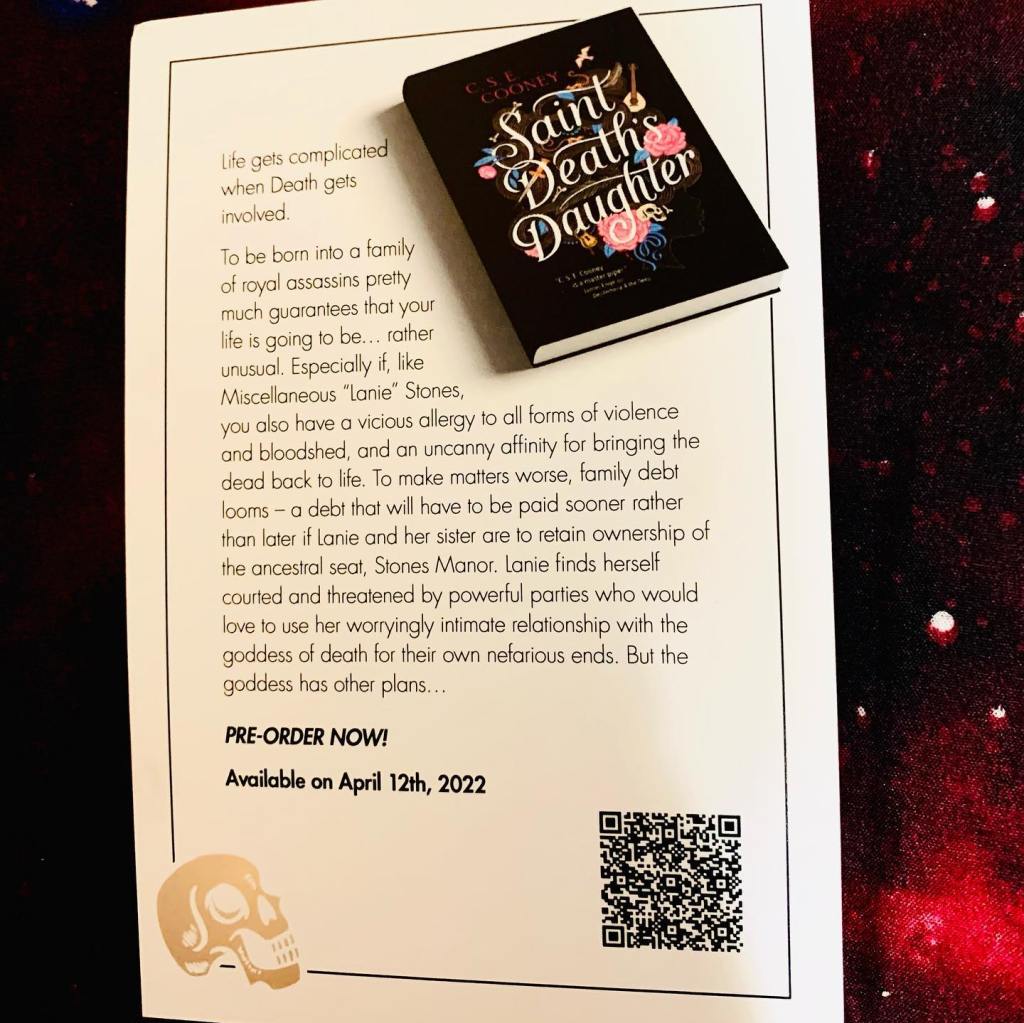
I will be reading from my forthcoming novel SAINT DEATH’S DAUGHTER!

Sunday, August 15th, 3:30 PM

Duration: 30 Minutes (really, it’s more like 22!)

Leave a comment

Filed under Uncategorized

Concordance, Conschmordance

One of the MOST FUN THINGS about writing in the same world for a thousand years–stories that take place in different countries, in different parts of the timeline, some of it history and some of it myth and all of it in translation, but same damn world nonetheless–is that you get to reference yourself all the time and it’s all these little jokes EVERYWHERE.

Like Twice-Drowned Saint has this section that talks about two movies, but the two movies are two of my old stories (one of them in Bone Swans), and some of the first fiction I ever published: “Life on the Sun” and “Godmother Lizard.”

There’s a character in Saint Death’s Daughter, Havoc, who is loosely related to the Jack o’ the Hills stories. And my short story “From the Archives of the Museum of Eerie Skins,” forthcoming with Uncanny Magazine, has cameos from “The Witch in the Almond Tree” characters.

And don’t get me started on all the Dark Breakers references.

I SHOULD MAKE A WHACHOOMACALLIT! A CONCORDANCE!

This bit (below) was always in THE TWO PAUPERS, but now I’ve made it even CHEEKIER, and only those who’ve read BONE SWANS (and who remember it) will get it.

Also, THIS TIME, I added in an artist that I’ve named after my friend Lea Grover (author of Becoming SuperMommy). I used to model for Lea, back in Chicago. She’s got my butt up in her living room.

Lea, I think, would fit right into the Dark Breakers world. She’d certainly ROCK the Voluptuist movement of the New Century. She’d be one of the premier artists of Seafall, and give Elliot Howell a run for his money. And HE’D be HER biggest fan. So there.

***

“Desdemona had opted to dress as the iconic Swan Princess from legend, Dora Rose. Everyone knew the story; it was the sort of thing Voluptuist artists scarfed up like cheap wine and day-old bread. There were several famous paintings on the subject. (Gideon favored Leha Borgrove’s watercolor-and-inks over Elliot’s oils; Elliot tended to idealize the female and animal form, but Leha wasn’t afraid to make her swan girls ugly, mighty, and mean.) There was also a ballet (which Gideon had never seen), an opera (which he loathed), and a play that Ana had written for the Seafall Fringe Festival (which he had gone to watch every night, although Ana didn’t know that).”

– “The Two Paupers”: Revised and Expanded for Dark Breakers

Leave a comment

Filed under Uncategorized

Our “Sinisterversary”!

PARTY TIME! Authors C. S. E. Cooney, Jessica P. Wick, Amanda J. McGee & Mike Allen celebrate the one-year birthday of A SINISTER QUARTET!

Dear Fellow Readers,

Last year, mid-pandemic, Mythic Delirium put out an anthology called A Sinister Quartet: four long fictions falling under the “weird dark fantasy and horror” category.

Some stories were inspired by fairy tales, some by myth, some by nightmare, and we are celebrating all of them in our one-year anniversary celebration!

Join the authors of A Sinister Quartet for a night of READINGS! GAMES! GIVEAWAYS! AUDIENCE Q&A WITH AUTHORS! AUTHORS INTERVIEWING EACH OTHER!

To get in the mood, we have the authors’ playlists for their stories, recipes based on their stories, and even drinks! Egad!

If you’ve already read the book and feel like dressing up like your favorite characters, that is totally welcome. The authors are already plotting to do the same for each other!

Register for your Free Ticket, and at noon on the day of the event, you’ll get your Zoom link for that evening!

More About the Authors!

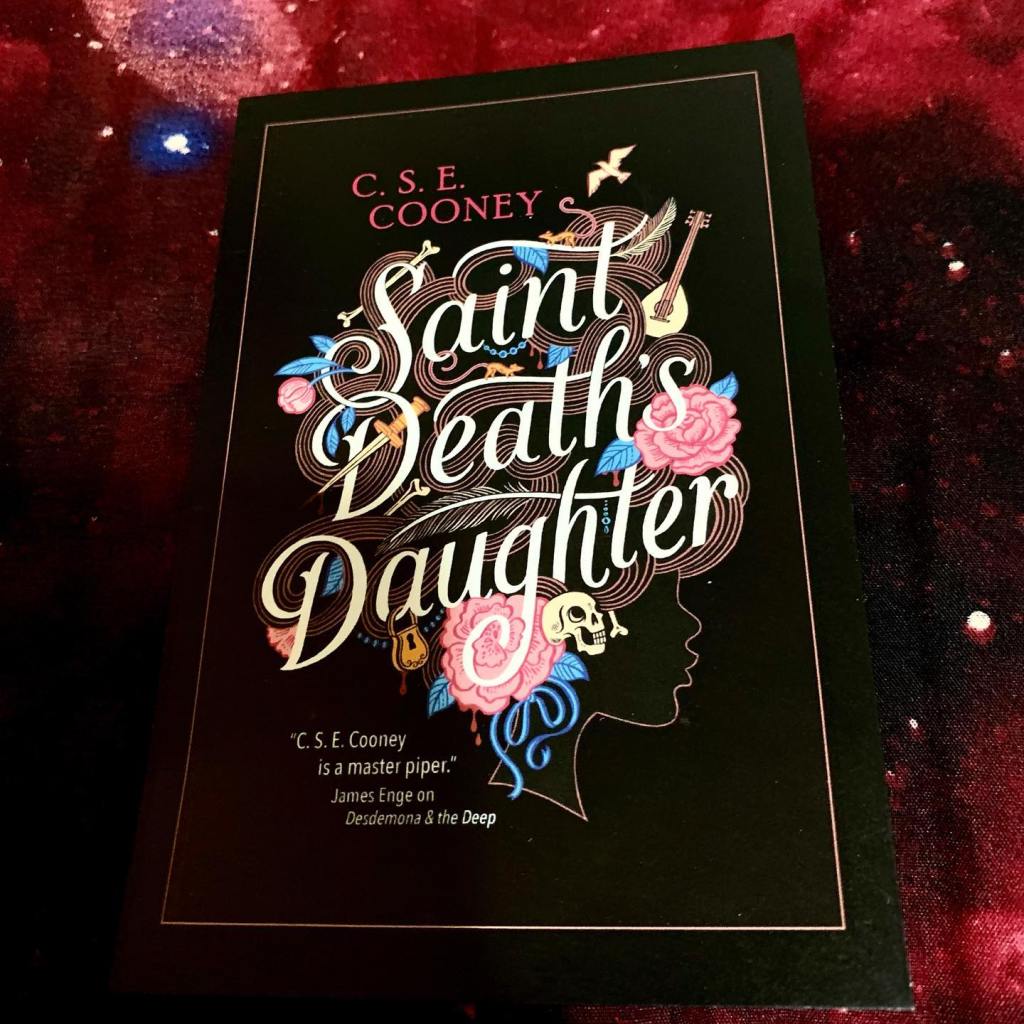
C. S. E. Cooney is the World Fantasy Award-winning author of Bone Swans: Stories. In early 2022, her novel, Saint Death’s Daughter, will be forthcoming from Solaris , as well as her new short fiction collection, Dark Breakers, from Mythic Delirium.
Jessica P. Wick is a writer, poet, and editor. She co-founded Goblin Fruit with Amal El-Mohtar, a quarterly e-zine of fantastical poetry, and is a passionate advocate for the reading aloud of poetry and fiction. Her poetry has been nominated for the Rhysling Award and received honorable mentions in Year’s Best Fantasy and Horror anthologies. Her short fiction can be found scattered across the internet.
Amanda J. McGee is a mapmaker by day and a writer by night. She has degrees from Hollins University and Virginia Tech, where she studied languages, politics, and infrastructure. She is the author of the fantasy series The Creation Saga, one half of the podcast Pop Fizz!, and blogs weekly on books, movies, anime, and writing advice.

Mike Allen, publisher at Mythic Delirium Books, is the editor of Mythic Delirium and Clockwork Phoenix. His horror story collection Unseaming was nominated for the Shirley Jackson Award and contained a finalist for the Nebula Award for short fiction. His most recent collection of verse, Hungry Constellations, was a Suzette Haden Elgin Award nominee. Allen also is the the arts and culture columnist for the Roanoke Times.

Leave a comment

Filed under Uncategorized