Here’s a StoryBundle for YOU! “The Twisted Folklore Histories StoryBundle!”
Here is the blog with all the relevant details ($5 for 4 books, $20 for all 12), which books are bonus, and so on. It is curated by none other than our own Mike Allen of Mythic Delirium!
I read Shadow Atlas in 2022 and thought it was so beautifully put together! I’ve read several Eugen Bacon stories, and loved every one. I’m gaga for anything Angela Slatter aka AG Slatter, as you probably know by now. And that ISOBEL YAP COLLECTION OMG.
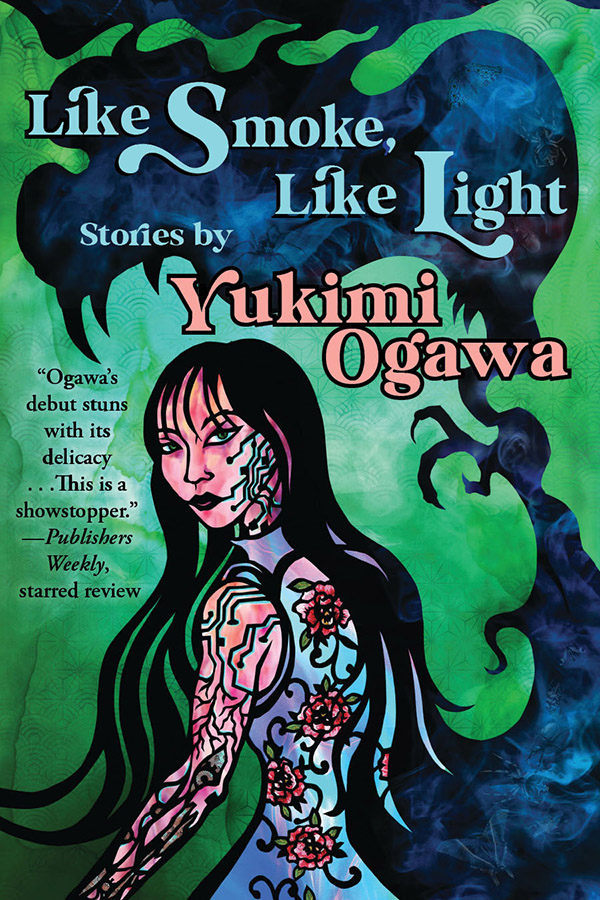
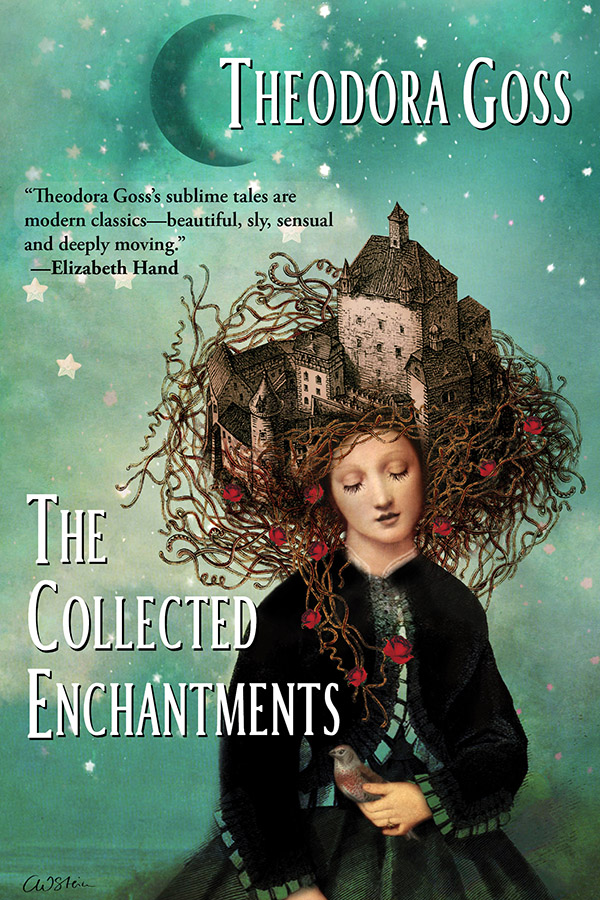
And look–in addition to some of my books, there are my Mythic Delirium publishing buddies: Theodora Goss, Barbara Krasnoff, and Yukimi Ogawa! Also very excited to see Elwin’s collection! I mean! AMAZING STUFF!
HERE’S THE FULL LIST OF WHAT YOU’LL GET!
Chasing Whispers, Eugen Bacon (Raw Dog Screaming Press) Shadow Atlas: Dark Landscapes of the Americas, Carina Bissett, Hilary Dodge and Joshua Viola, eds. (Hex Publishers) Dark Breakers, C. S. E. Cooney (Mythic Delirium Books) The Twice-Drowned Saint, C. S. E. Cooney (Mythic Delirium Books) Dance on Saturday: Stories, Elwin Michael Cotman (Small Beer Press) The Collected Enchantments, Theodora Goss (Mythic Delirium Books) The History of Soul 2065, Barbara Krasnoff (Mythic Delirium Books) Black Cranes: Tales of Unquiet Women, Lee Murray and Geneve Flynn, eds. (Raw Dog Screaming Press) Like Smoke, Like Light: Stories, Yukimi Ogawa (Mythic Delirium Books) A Feast of Sorrows, Angela Slatter aka AG Slatter (Prime Books) Blood Mountain: Stories, Brenda S. Tolian (Raw Dog Screaming Press) Never Have I Ever: Stories, Isabel Yap (Small Beer Press)
“In the early twentieth century over two hundred of New York’s most glamorous socialites joined the suffrage movement. Their names—Astor, Belmont, Rockefeller, Tiffany, Vanderbilt, Whitney, and the like—carried enormous public value. These women were the media darlings of their day because of the extravagance of their costume balls and the opulence of the French couture clothes, and they leveraged their social celebrity for political power, turning women’s right to vote into a fashionable cause.
Although they were dismissed by critics as bored socialites “trying on suffrage as they might the latest couture designs from Paris,” these gilded suffragists were at the epicenter of the great reforms known collectively as the Progressive Era. From championing education for women, to pursuing careers, and advocating for the end of marriage, these women were engaged with the swirl of change that swept through the streets of New York City.
Johanna Neuman restores these women to their rightful place in the story of women’s suffrage. Understanding the need for popular approval for any social change, these socialites used their wealth, power, social connections and style to excite mainstream interest and to diffuse resistance to the cause.”
WHY I LOVED NARRATING IT
So many reasons! It was beautifully and entertainingly written, for one. Deeply researched. It also seemed to make century-old gossip seem as fresh as the latest scandal-tweet.
It had just enough gilding to make it glitter, and indulged enthusiastically in sartorial and architectural descriptions–but it also (and this was the most shocking yet somehow hideously unsurprising part), took a keen and measured look at erasure in history: how white women have erased black women from the feminist movement over and over again; and how a new generation of the women’s movement will ruthlessly work to obliterate evidence of the old, as if liberation were their–and only their–story to tell.
Though the concentration of this book was focused on the nineteen-teens, it stretched tendrils into the 1890’s, and tentacles into the 1920’s, giving us a hint of whence came this major shift in women’s–and human rights’–history, and where, inevitably, it was going.
“Marjorie Hillis was working at Vogue when she published the radical self-help book Live Alone and Like It: A Guide for the Extra Woman. With Dorothy Parker–esque wit, she urged spinsters, divorcees, and old maids to shed derogatory labels, and her philosophy became a phenomenon. From the importance of a peignoir to the joy of breakfast in bed (alone), Hillis’s tips made single life desirable and chic.
Now, historian and critic Joanna Scutts reclaims Hillis as the queen of the “Live-Aloners” and explores the turbulent decades that followed, when the status of these “brazen ladies” peaked and then collapsed. The Extra Woman follows Hillis and others like her who forged their independent paths before the 1950s saw them trapped behind picket fences yet again.”
WHY I LOVED NARRATING IT:
Well, for one, I had that song, “Live Alone and Like It,” from Dick Tracy by Stephen Sondheim stuck in my head all week. Here’s Dr. Who’s own Captain Jack (AKA John Barrowman) singing it at a review in 2008, though I’m more familiar with Sondheim: A Celebration at Carnegie Hall version, from 1992, found here.
Anyway, that was very cheerful. And also–this book, chronologically, follows so closely on the heels of Gilded Suffragists that I about near fell over. It’s like I knew all these things happened in history, but I didn’t understand the order, or how one thing fed into the next, and how the cumulative view brings us to where we are today. This book covers the 1920’s-1960’s, from the flappers, the the Crash, to the Great Depression, to WWII, and then the strange, strange 1950’s, through Kinsey and the 60’s!
And through it all, this woman, Hillis, keeps insisting that women are people, that it was okay to live alone–could even be joyful and glamorous. That it was okay to be single, or divorced, or widowed. That it was okay to be old.That it was your business. That your home was your space to claim. Not to bother “keeping up with the Joneses” but to pay attention to no one else’s numbers but your own. And to budget the luxuries.
I loved it.
INTERESTING FACTS:
The author Joanna Scutts is curating a special exhibit at the New York Historical Society called “Hotbed.”
…WHICH I PUT IN THE CALENDAR AND I’LL BE GOING TO! It’s on from the first week of November 2017 to March of 2018.
“Hotbed explores the vibrant political and artistic scene of Greenwich Village in the early 20th century, where men and women joined forces across the boundaries of class and race to fight for a better world. At the heart of the downtown radicals’ crusade lay women’s rights: to control their own bodies, to do meaningful work, and above all, to vote. Immersive installations and more than 100 artifacts and images—drawn from New-York Historical’s archives and several private collections—bring to life the bohemian scene and its energetic activist spirit. The exhibition is curated by Joanna Scutts, Andrew W. Mellon Postdoctoral Fellow in Women’s History, and Sarah Gordon, Senior Postdoctoral Marie Zimmermann Legacy Fellow in Women’s History, under the direction of Valerie Paley, vice president, chief historian, and director of the Center for Women’s History at the New-York Historical Society, and is on view in the Joyce B. Cowin Women’s History Gallery.”
“As geek culture goes mainstream—from Game of Thrones to the Avengers—it’s never been more important to look at the role women play in it, and the future they’re helping to create. Kameron Hurley’s smart, funny, and profane voice guides readers through the world of fandom and the coming revolution in pop culture.
Kameron Hurley—one of the most influential young voices in science fiction and geek culture—presents The Geek Feminist Revolution: Essays on Subversion, Tactical Profanity, And the Power of Media. The Geek Feminist Revolution is Bad Feminist for the Comic-Con crowd. This powerful collection of essays is about overcoming misogyny in geek culture, the persistence required to succeed as a woman writing science fiction, and imagining a better world and a better future through the stories we write.”
WHY I LOVED NARRATING IT:
This was the first of these three books I narrated, and the first piece of feminist non-fiction I ever had the pleasure to put my mouth to. Egad, it set such FIRES in me. I was buzzing for days. It made me feel very fierce, and very informed–particularly since SF/F is the genre I write in, and I kept bumping into names of peers in my field.
But when taken together with these other two books, and thinking about where women are, and where we came from, and what it means to be a woman right now, working, struggling, trying to rise above apathy, and move toward justice, it just . . . it makes me want to read it all over again–this time for pleasure. And buy copies for friends.
It is a very specific set of essays, focused on a particular time (now) and place (the internet, mostly) and community (geeks everywhere!), but some of that specificity has wide repercussions. Gamer Gate, for example, and trolling, and cyber-bullying, and identity, and survival. I recalled it strongly as I narrated the two more recent releases above, and felt the honor of having narrated it all over again.
(Link to comprehensive audiobook discography here.)




 INTERESTING FACTS:
 C.S.E. Cooney